It's not a phone.
Holm · Radio & Companion · 2026
Holm is a screen-free first device for teens. It splits radio into its private and social halves: a base unit for listening alone and a companion for listening together, with no feed, no profiles, and no digital footprint.
A phone is a teen's whole world…
It is their music, their friends, and their downtime, all optimized by short-form feeds to capture every spare minute for engagement and data.
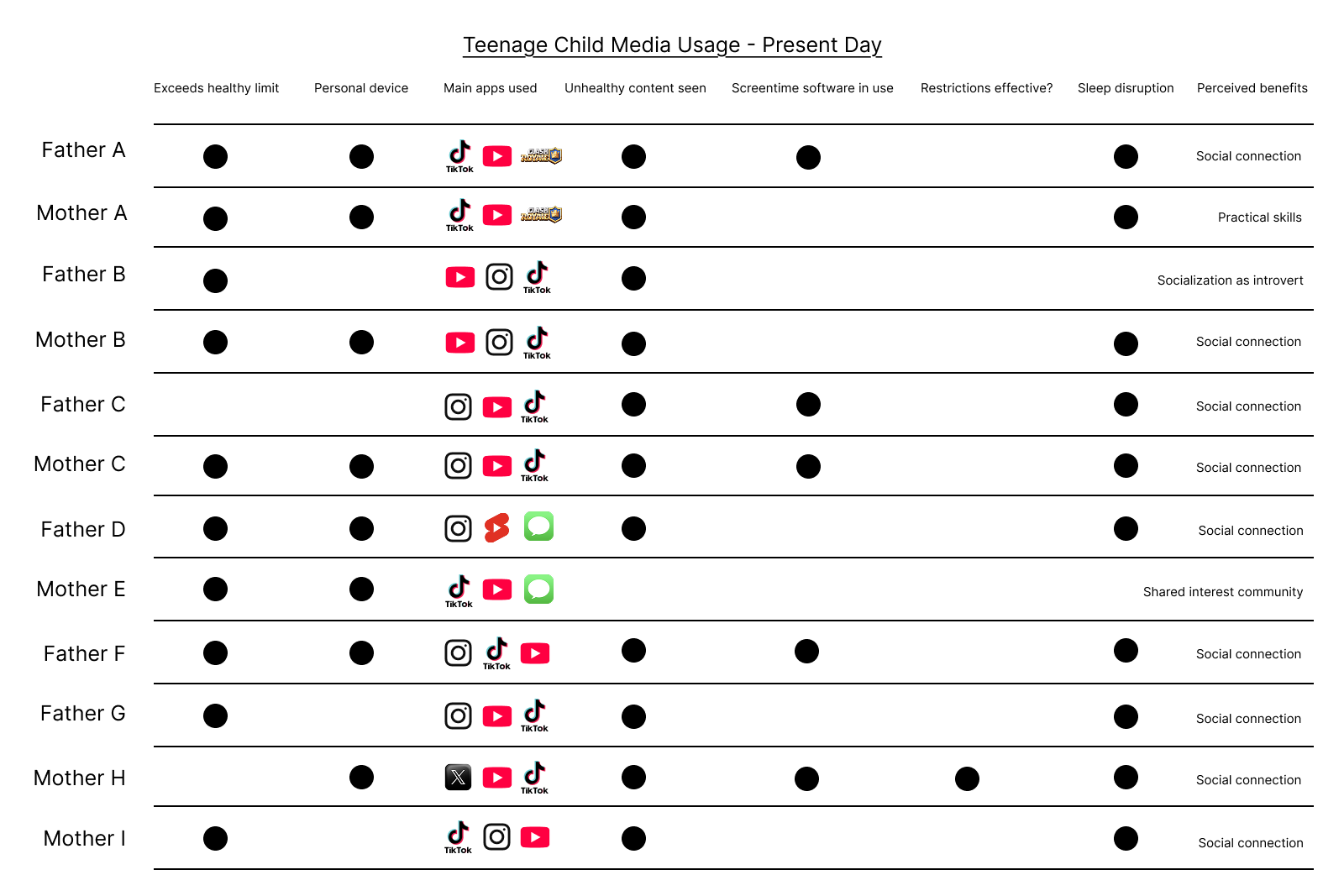
…and it is quietly costing them the ability to focus.
Parents I interviewed could all see the harm, and almost none had found restriction effective, because the same device causing it was their child's main link to friends. The largest study of school phone bans reached the same conclusion: take the device away and the want just finds another route. A ban treats the symptom, not the pull.
What if a teen's first device redirected the pull instead of restricting it?
From blueprint to prototype
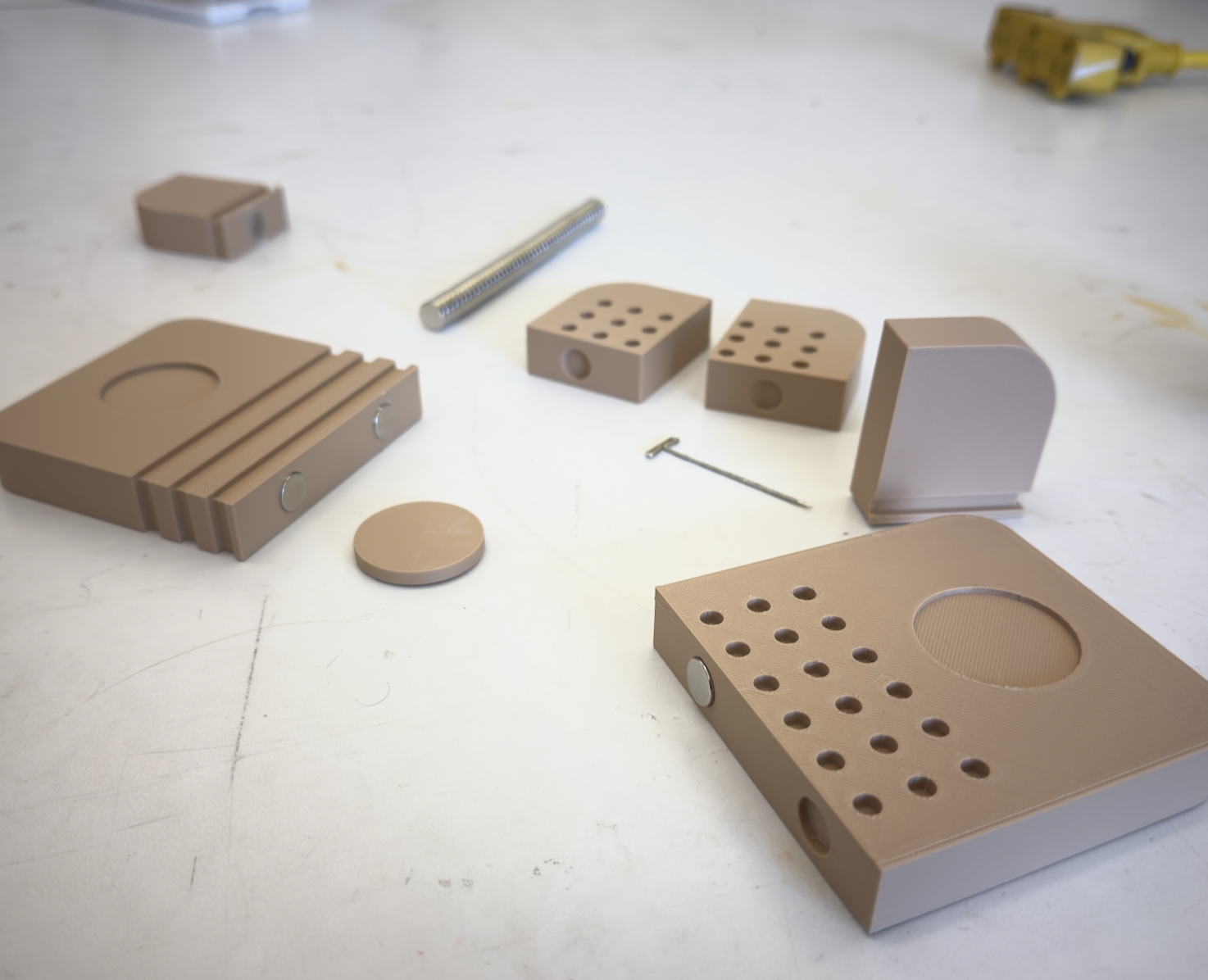
The system went through renders, physical mockups, and working models before landing on the final build.
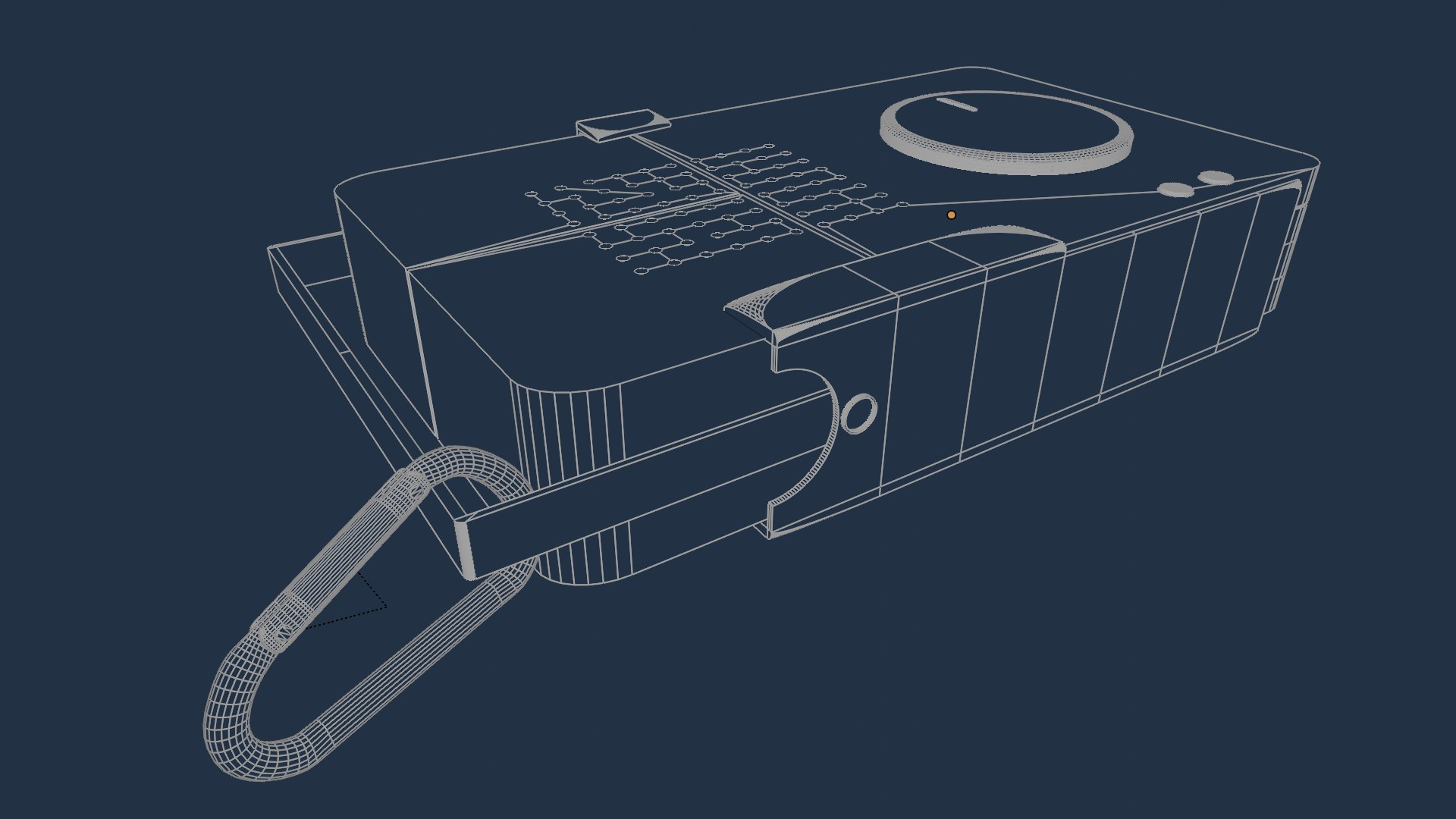
Holm: a first device that is not a phone.
Holm redirects the want for stimulation, escape, and connection into a medium that cannot track, curate, or expire. A radio takes up space, sits on a desk, and makes every use a deliberate choice instead of a reflex.
One input, infinite directions.
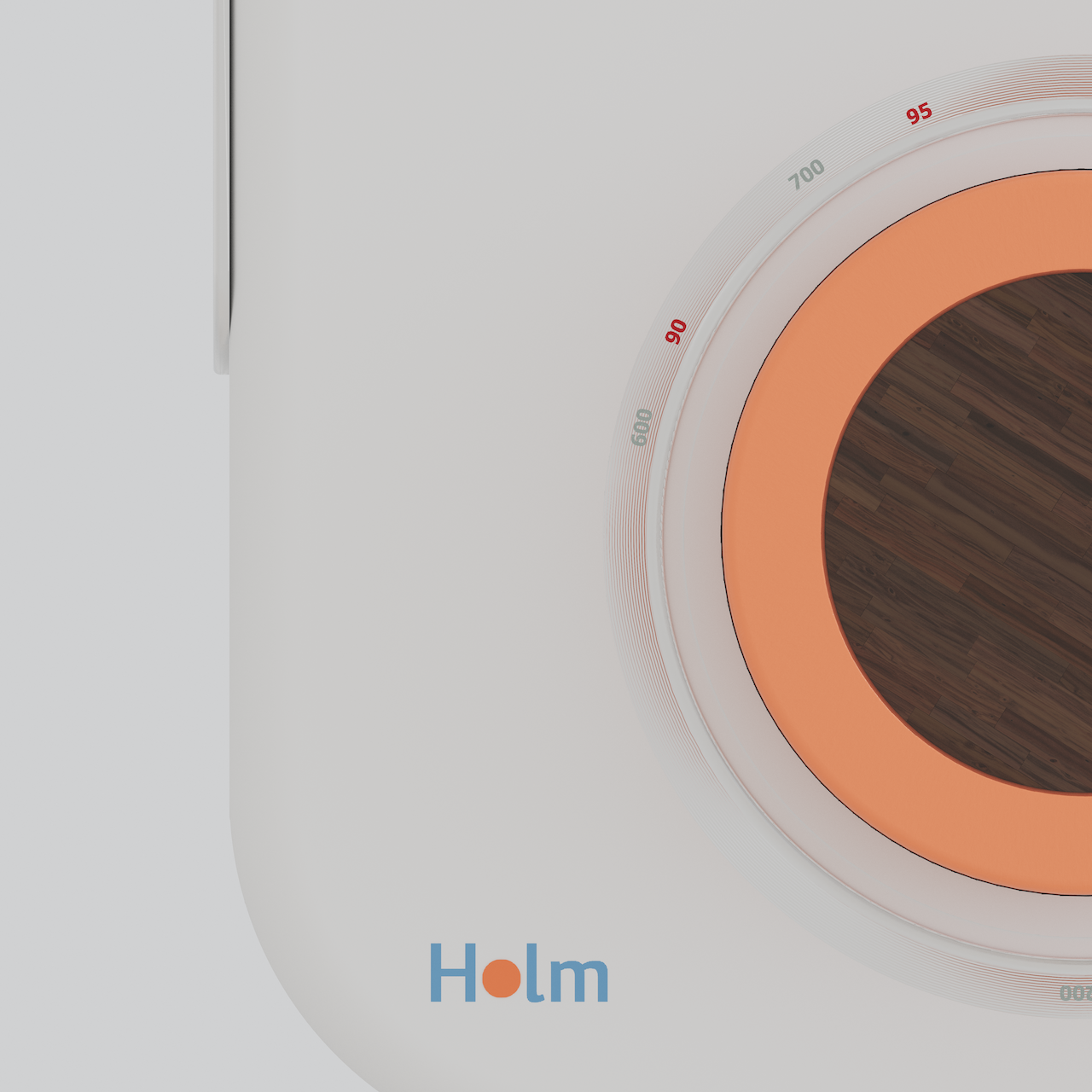
The dial is the product's argument made physical. No screen, no feed, no shortcut attached to spinning it. It strips the interface to a single rotating object and forces discovery over consumption.
A single LED replaces the screen, shifting color and position to show AM/FM tuning through the dial.
Connection without a record.
The walkie-talkie detaches magnetically, charges when docked, and wakes both devices the moment it is pulled away. One channel carries the radio for private listening on the move; three are for talking. Everything said on them is local and unrecorded, so communication exists only in the moment.
Built to earn a spot on the desk.
The carrier doubles as handle and stand, so the set moves between a shelf and a hand without blocking the dial or the dock. One light carries all status. Color marks only the primary controls, so a new user can read the object at a glance and the interaction teaches the rest.

Unboxing is the first tune-in.
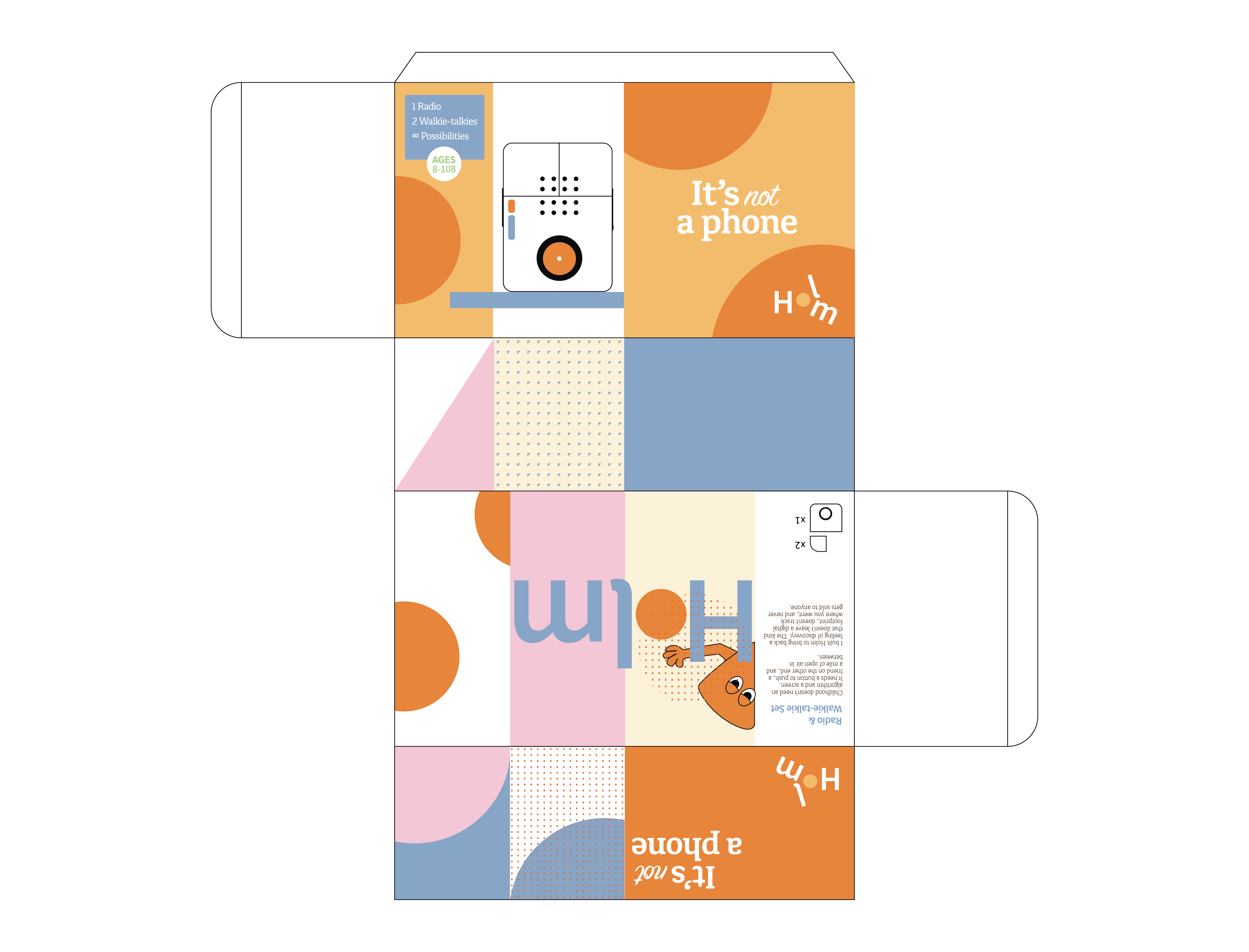
The kraft box carries the same restraint as the product: no branding shout, no plastic, just the set nested in place for the first dial turn.
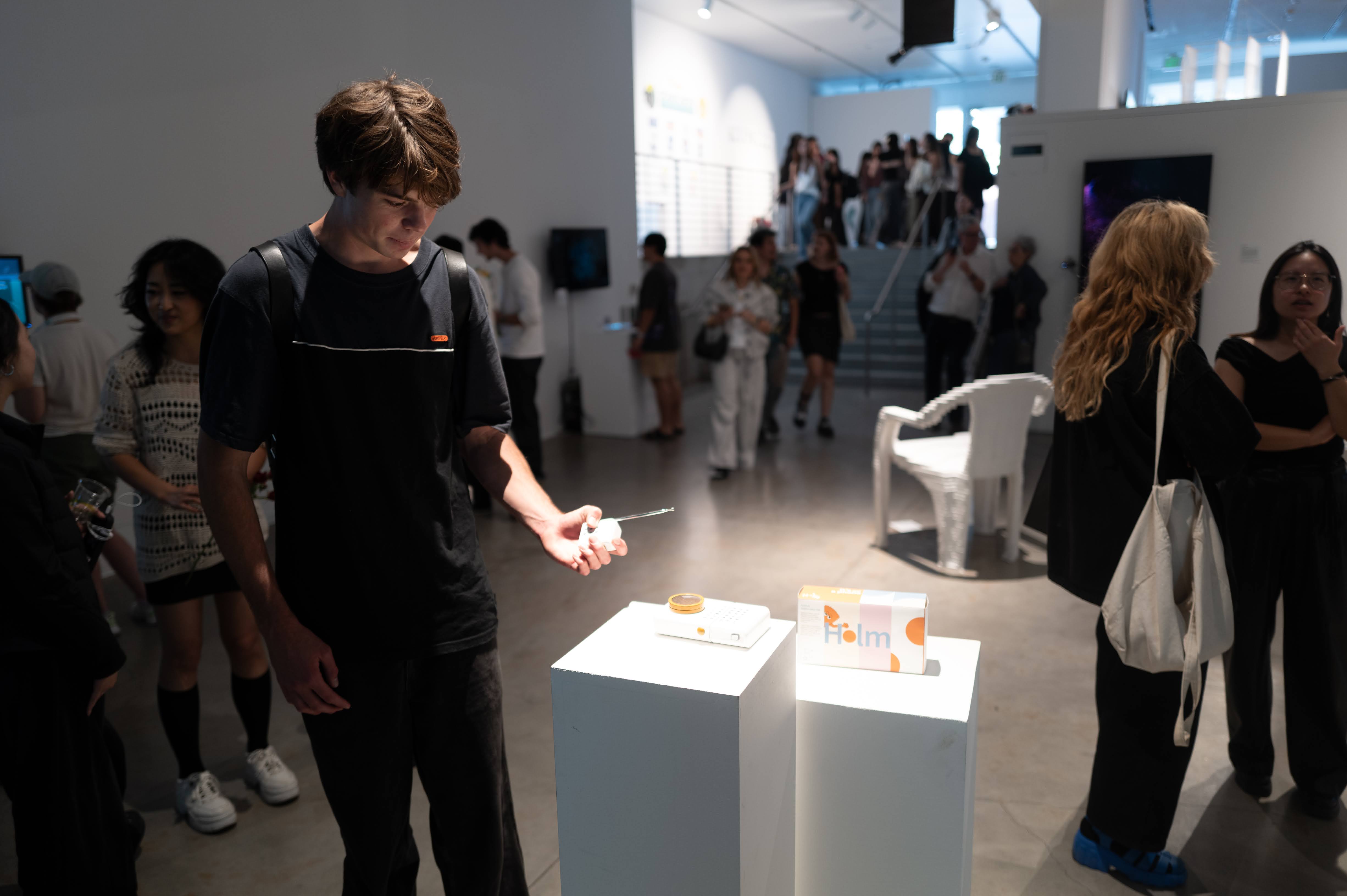
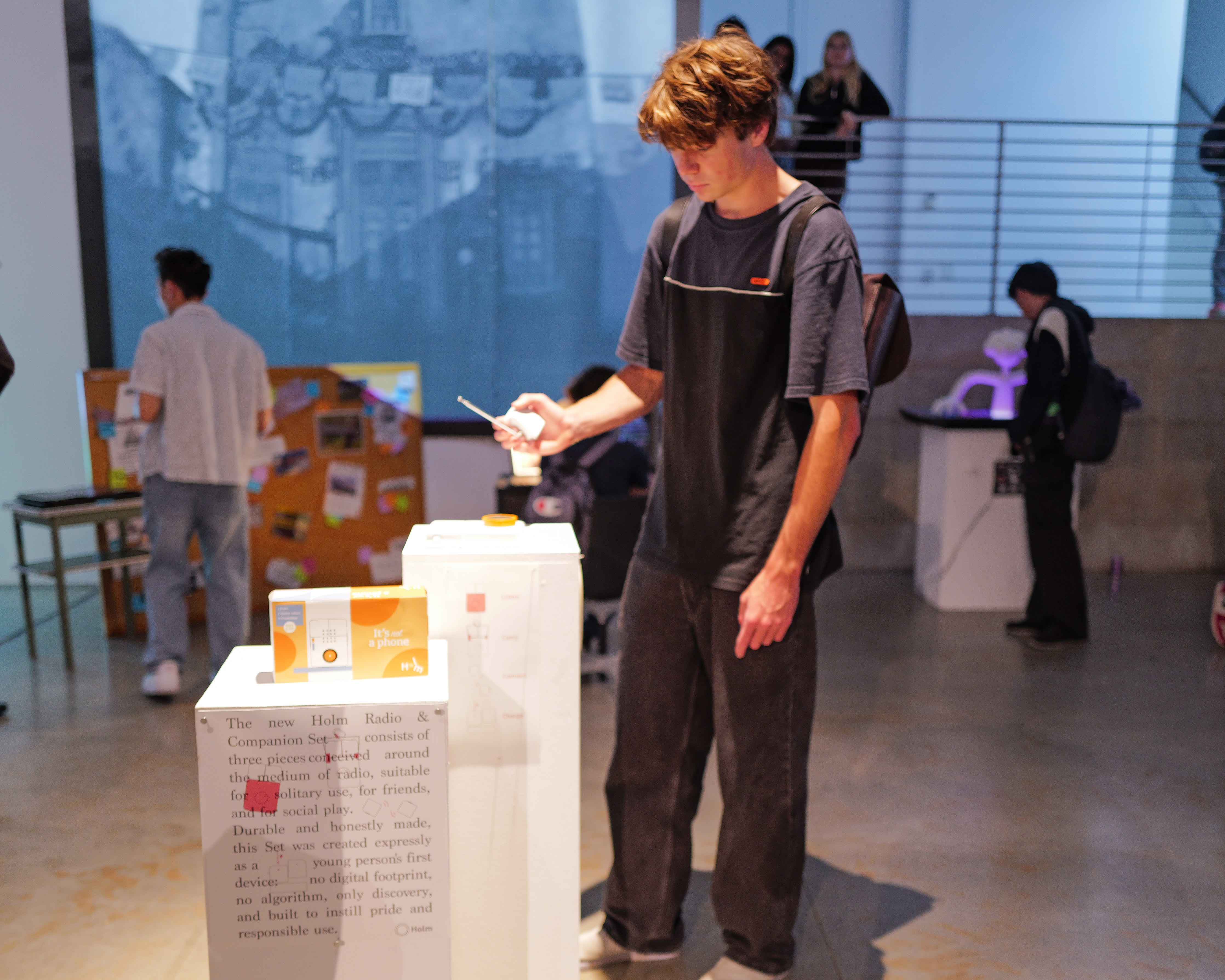
In a gallery full of screens, people reached for the dial.
Holm exhibited publicly alongside screen-based work, and visitors picked it up, tuned it, and pulled the companion from its dock unprompted. The prototype consisted of a radio built with Adafruit's RP2040 Prop-Maker Feather and a sub-GHz radio module along with a set of walkie-talkies to simulate the companion.
.jpg)