
Wholecut
Demand Design for Unwanted Cuts · 2026
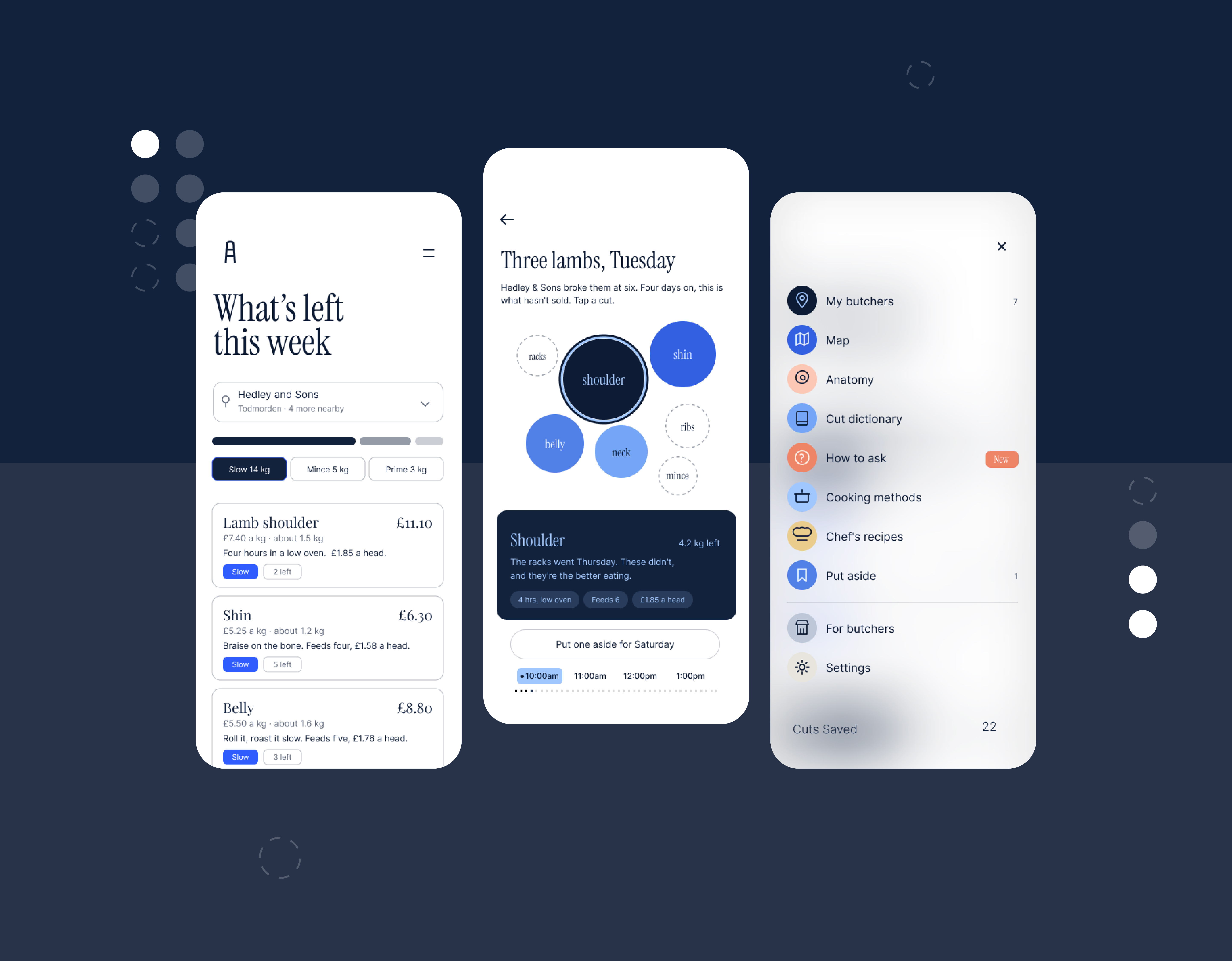
Sustainable eating is intimidating. It gets framed as a choice between vegetarian and not, leaving people who care but still eat meat with no move to make. Wholecut is a step in between.
Butchers break whole animals but sell from a fifth of them. Racks and loins go in a day. Shin, belly and neck go to mince or waste. Meanwhile a growing middle class wants to eat ethically and finds high welfare meat priced two to three times above supermarket, with the premium sitting on the cuts already spoken for.
The surplus is the opportunity. It is the cheapest meat on the counter, it keeps an independent butcher solvent, and cooking it rebuilds a connection to food that pre-portioned trays removed. Wholecut lists what is left after each break, prices it by the kilo and by the head, and says plainly where it came from.
What I did
- Researched the meat paradox and designed against it, using butchery's own vocabulary instead of euphemism.
- Built the purchase flow around carcass balance, turning what remains into a filter, a price and a cost per head.
- Made a component and type system in Figma, including a per serving icon set tested at list scale.
- Interviewed independent butchers on breaking cycles, surplus and margin.
- Tested honest language against a conventional cut first browse to see whether it converts or deters.